Global Aid in Crisis as USAID Closes Its Doors
In a rare show of bipartisan unity, former Presidents Barack Obama and George W. Bush, joined by global health activist Bono, have issued an emotional and scathing critique of the Trump administration’s decision to dismantle the U.S. Agency for International Development (USAID).
Their remarks follow a sobering Lancet report warning that the abrupt rollback of USAID’s programs could cause over 14 million additional deaths by the year 2030—one-third of them among children. The report characterizes the impact as equivalent to a man-made global pandemic, calling the move a conscious and catastrophic policy failure.
The End of an Era – USAID’s Closure and What Replaces It
A Historic Agency Dismantled
Founded in 1961 under President John F. Kennedy, USAID has for decades been the backbone of U.S. foreign aid and global humanitarian assistance. It played a pivotal role in global health, education, nutrition, and disaster response, especially in low- and middle-income countries.
But in March 2025, Secretary of State Marco Rubio announced that 83% of USAID’s programs were being terminated, with the agency set to be absorbed into the State Department under a new and controversial initiative: “America First.”
According to Rubio and President Donald Trump, the agency had become “bloated,” “inefficient,” and—according to Trump—run by “radical left lunatics.” Tech billionaire Elon Musk went further, calling it a “criminal organization.”
The administration argues that the newly created America First initiative will prioritize U.S. strategic interests more narrowly, reduce spending, and “eliminate wasteful foreign entitlements.”
The Human Cost – 14 Million Additional Deaths Predicted
The Lancet Delivers a Grim Forecast
A multinational team of public health experts has published a bombshell study in The Lancet, outlining the expected consequences of USAID’s abrupt shutdown.
Their projection: over 14 million avoidable deaths by 2030, if cuts are not reversed. Roughly one-third of these deaths are anticipated to be among children under five.
“Unless the abrupt funding cuts announced and implemented in the first half of 2025 are reversed, a staggering number of avoidable deaths could occur by 2030,” the study warns.
The researchers note that USAID has prevented more than 91 million deaths globally in the past 20 years—through programs supporting vaccinations, maternal care, HIV/AIDS prevention, sanitation, and nutrition.
“For many nations,” they wrote, “the shock of USAID’s removal is comparable to the onset of a pandemic or armed conflict—but entirely avoidable.”
Global Leaders React – Obama, Bush, and Bono Speak Out
Barack Obama: “Gutting USAID is a Travesty”
In a video farewell shared with USAID staff, President Obama delivered a powerful message:
“Gutting USAID is a travesty, and it’s a tragedy. Because it’s some of the most important work happening anywhere in the world,” he said.
Obama praised the agency’s track record of saving lives, fostering economic development, and even creating new U.S. trade partners through stabilization and infrastructure aid. He predicted that “leaders on both sides of the aisle will one day realize how much you are needed.”
George W. Bush: “It Is in Our National Interest That 25 Million People Now Live”
President George W. Bush, in a rare public disagreement with Trump’s agenda, focused his message on PEPFAR (President’s Emergency Plan for AIDS Relief), a signature initiative from his presidency that saved over 25 million lives in Africa and other regions.
“Is it in our national interest that 25 million people who would have died now live? I think it is—and so do you,” Bush told the staff.
Bono: “They Called You Crooks, When You Were the Best of Us”
U2 frontman and global humanitarian Bono joined the tribute with a poem dedicated to the staff, saying:
“They called you crooks / When you were the best of us.”
Bono has long worked with USAID through public-private health and education partnerships. He credited the agency with facilitating historic advancements in HIV/AIDS treatment, girls’ education, and clean water access across Africa.
What’s Being Lost – USAID’s Impact by the Numbers
Over its six-decade lifespan, USAID has been responsible for:
-
Saving 91 million lives through global health programs
-
Supporting primary education for over 80 million children
-
Delivering nutrition aid to 150 million in famine-affected regions
-
Building infrastructure in over 70 countries
-
Managing disaster response in over 200 major emergencies
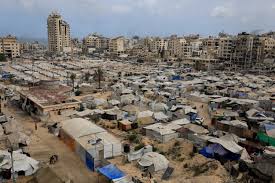
The cuts have hit programs in sub-Saharan Africa, Southeast Asia, Latin America, and conflict zones like Syria, Sudan, and Gaza, where humanitarian crises are now worsening.
Business, Ethics, and Geopolitics – Why CEOs Should Pay Attention
A Strategic and Economic Misstep?
While framed as a cost-cutting move, experts argue that closing USAID could undermine long-term U.S. strategic interests. By fostering economic development and political stability abroad, USAID often functioned as a soft power multiplier.
Aid recipients often became future trade partners, diplomatic allies, or sources of raw materials and talent. As such, many believe the decision may reduce U.S. influence while China and other rivals increase their own foreign aid footprint.
Impact on Global Supply Chains and Private Sector Partnerships
USAID partnered with hundreds of corporations, including healthcare firms, food and agriculture companies, engineering consultancies, and education startups. For many businesses, USAID-funded projects provided both profit and purpose, operating under public-private partnership (PPP) models.
With these partnerships dismantled, the private sector faces reduced international collaboration opportunities, particularly in emerging markets.
What Happens Now – And Is There a Path to Reversal?
As USAID is folded into the State Department and replaced by the America First initiative, critics argue that the real cost won’t be measured in dollars—but in millions of lives, lost opportunities, and shrinking global leadership.
The closure has sparked widespread backlash from global NGOs, health experts, and international partners, and may become a flashpoint in the 2026 U.S. elections.