Kremlin Confirms Talks Are in Motion
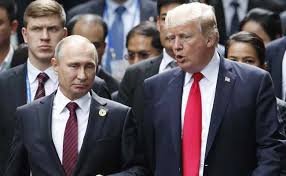
A top Kremlin official has confirmed that preparations are underway for a critical face-to-face meeting between former U.S. President Donald Trump and Russian President Vladimir Putin—an engagement that could take place “in the coming days,” possibly as early as next week.
The announcement came from Yury Ushakov, one of Putin’s most senior foreign policy aides, who told Russian state media on Thursday that “an agreement has been reached” between the two camps. The exact timing is still being worked out, but sources indicate the aim is for the summit to happen within a week.
The location of the potential meeting has already been decided, according to Ushakov, though details will be “announced later.” This marks a notable acceleration in diplomatic efforts, with both sides now actively preparing for what could be one of the most consequential meetings of the post-Ukraine war era.
Trump’s Ukraine Endgame: A Ceasefire or Consequences
Ceasefire Talks Reach a Tipping Point
The meeting would follow a recent visit to Moscow by U.S. special envoy Steve Witkoff, Trump’s personal diplomatic appointee, who has been spearheading backchannel negotiations with the Kremlin. This was Witkoff’s fifth visit to Moscow this year and came after Trump issued a Friday deadline for Russia to agree to a ceasefire—or face secondary sanctions that could cripple its global energy sales.
On Wednesday, Trump hinted that a meeting with Putin was imminent, saying there was a “good chance” the two leaders could sit down “very soon” to discuss a path to ending the war in Ukraine. However, he downplayed expectations, cautioning reporters that “there had not been a breakthrough” in the Witkoff-Putin meeting.
“I’ve been disappointed before with this one,” Trump said, referring to Putin.
Still, the urgency and frequency of recent diplomatic contact suggest Trump is pursuing a deal aggressively—even if publicly tempering expectations.
The Tariff Threat: Trump’s Pressure Campaign in Action
India Hit With 25% Tariff for Buying Russian Oil
Just hours after Witkoff’s latest round of Moscow meetings, Trump followed through on a warning issued to global buyers of Russian oil. On Wednesday, he slapped a punitive 25% tariff on India for continuing to import energy from Russia, a move that underscores his willingness to use economic leverage against allies and adversaries alike.
The White House released the tariff announcement via a document posted online late Wednesday, indicating that other countries could face similar measures unless they shift their energy policies in line with Washington’s pressure campaign.
Trump’s strategy? Cut off the Kremlin’s oil revenues by targeting those who fund them. He’s betting this economic chokehold, combined with high-level diplomatic pressure, will bring Putin to the table with real concessions—or force a global reshuffling of energy alliances.
Zelensky Enters the Picture: Ukraine Signals Openness
“Russia More Inclined Toward Ceasefire,” Zelensky Says
Ukrainian President Volodymyr Zelensky, who spoke with Trump after the Witkoff-Putin meeting, said in his nightly address on Wednesday that there are tentative signs of progress.
“It seems that Russia is now more inclined toward a ceasefire,” Zelensky told the nation.
But the Ukrainian leader also issued a warning: “The pressure on Russia is working. But the main thing is that they do not deceive us in the details. Neither us, nor the United States.”
Zelensky’s cautious optimism signals that Kyiv remains deeply wary of Russian backtracking—especially as previous ceasefire promises have repeatedly collapsed. Still, his participation in the evolving dialogue suggests he’s not ruling out a deal brokered under Trump’s watch.
The Missing Piece: Will Zelensky Join the Meeting?
Trilateral Proposal Still Awaits Response from Moscow
One unanswered question looms over the upcoming summit: will Ukraine be at the table?
Ushakov confirmed that Russia has not yet responded to a U.S. proposal—put forward by Witkoff—for trilateral talks between Putin, Trump, and Zelensky. The idea would be to bring all three major players together in a historic bid to negotiate a comprehensive ceasefire or framework for peace.
If the Kremlin accepts the invitation, the meeting could shift from a bilateral political spectacle to a global diplomatic breakthrough. If they reject it, it may be seen as yet another instance of Moscow stalling while under economic and military pressure.
Either way, Trump is laying the groundwork for a bold diplomatic play—potentially positioning himself as the only Western leader capable of forcing Putin’s hand.
Strategic Timing: The Deadline Is Now
Friday Marks a Red Line for Russia
All of this is unfolding under a ticking clock. Trump’s ceasefire ultimatum to Putin is set to expire on Friday. If Russia fails to agree to terms, a new round of devastating secondary sanctions is expected—targeting not just Moscow, but any country that does business with it, particularly in oil and gas.
This means Friday isn’t just a diplomatic milestone—it could trigger a global economic chain reaction. By escalating tariffs and sanctions while simultaneously offering high-level talks, Trump is using a classic “carrot-and-stick” strategy to force a decision.
And according to Kremlin signals, it just might be working.
What’s Next: A Deal, a Deadlock, or a Shock?
The Trump-Putin summit could be a historic turning point—or another missed opportunity in a war that has dragged on for years with devastating consequences. Trump’s leverage—both economic and political—is arguably stronger than at any point since the invasion of Ukraine began.
The world will be watching closely in the days ahead. Whether the meeting happens behind closed doors or on the world stage, the next moves from Washington, Moscow, and Kyiv could reshape the geopolitical order heading into 2026.