Israel Moves to Take Control of Gaza City — A Strategic Shift With Global Implications
The Israeli Security Cabinet has approved a bold military plan to seize control of Gaza City — a move marking a significant escalation in Israel’s ongoing war in the enclave. The decision has sparked nationwide protests, drawn fresh international criticism, and raised concerns over humanitarian impact and hostage safety.
The timing is no accident: the initial phase of the plan is set to culminate on October 7, 2025, the second anniversary of the Hamas-led attack that ignited the war.
What the Cabinet Approved
Israel’s Prime Minister’s Office announced that the plan aims to “defeat Hamas” and prepare the military to take control of Gaza City while maintaining the provision of humanitarian aid outside combat zones.
While Prime Minister Benjamin Netanyahu has previously stated his intention to take full control of the Gaza Strip, the official plan appears more limited — focusing on Gaza City rather than the entire enclave.
Five Principles for Ending the War
The cabinet also endorsed five guiding principles:
-
Israeli security control of Gaza.
-
Establishment of a civilian administration free from Hamas influence.
-
Exclusion of the Palestinian Authority from governance.
-
Maintenance of humanitarian aid flows to non-combat areas.
-
Long-term military readiness to prevent Hamas resurgence.
The Phased Operation Timeline
According to Israeli sources, the military operation will unfold in multiple stages:
Phase One: Evacuation and Aid Expansion
-
Deadline: October 7, 2025.
-
Evacuation of Gaza City residents to central camps and surrounding areas.
-
Expansion of humanitarian aid — but none distributed within Gaza City itself, to push civilians toward evacuation zones.
Duration & Scope
-
The entire plan is projected to take up to five months.
-
It targets Gaza City specifically, not surrounding refugee camps.
-
Still, it will require the forced evacuation of nearly half the enclave’s population.
-
Israel’s military already controls roughly 75% of Gaza.
Military Concerns and Cabinet Tensions
The plan’s approval was not without dissent inside Israel’s leadership.
Warnings from the Military
IDF Chief of Staff Eyal Zamir cautioned the cabinet about:
-
Worsening Gaza’s already dire humanitarian crisis.
-
Increased risks to hostages still held in the enclave.
-
Potential diplomatic fallout and loss of international support.
Zamir had proposed a more limited plan, which was ultimately rejected by the cabinet.
The Prime Minister’s Office responded bluntly, stating that the alternative plan “would neither achieve the defeat of Hamas nor the return of the hostages.”
Why Focus Only on Gaza City?
Netanyahu has publicly maintained that Israel intends to take full control of Gaza. However, the approved plan stops short of this — for now.
Speaking to Fox News before the vote, Netanyahu said Israel aims to “remove Hamas” before handing the territory over to a civilian administration that is not Hamas and not hostile to Israel’s existence.
Analysts suggest the current focus on Gaza City could be a tactical step — securing the enclave’s political and symbolic heart before determining whether to expand operations elsewhere.
Strategic Goals and Tactics
According to Axios journalist and CNN analyst Barak Ravid, the military’s short-term goal is to evacuate all Palestinian civilians from Gaza City to central camps, enabling a siege and ground offensive to follow.
Whether Israel will eventually extend control to areas outside Gaza City that remain outside IDF control is still an open question.
On-the-Ground Reality
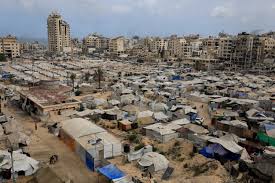
While Israel advances its military planning, the humanitarian situation in Gaza is rapidly deteriorating.
Mahmoud al-Qurashli, a displaced Palestinian, told Reuters:
“Practically all of Gaza has been squeezed into the western part of Gaza City.”
The concentration of civilians in shrinking areas raises the stakes for any siege, both militarily and diplomatically.
International Backlash and Domestic Protests
The announcement has ignited mass protests across Israel, driven by fears the plan could jeopardize hostage safety. Families of hostages have been among the loudest voices opposing the move.
Globally, pressure is intensifying on Israel to end the war and expand humanitarian aid, particularly as starvation risks grow in Gaza. Several international organizations and foreign governments have warned that further escalation will deepen the humanitarian disaster.
The October 7 Symbolism
The decision to set October 7 as the deadline for Phase One carries heavy political and psychological weight.
The date marks two years since the Hamas-led attack that triggered the war — a moment that reshaped Israeli politics and security policy. By aligning the military timeline with this anniversary, the government signals both determination and defiance.
Risks and Possible Outcomes
The plan poses three major risks:
-
Humanitarian Catastrophe – Mass displacement, combined with limited access to food and aid, could intensify global condemnation.
-
Hostage Safety – Expanded military action might put Israeli captives in greater danger.
-
Diplomatic Fallout – Key allies may view the move as a step away from negotiated solutions, complicating Israel’s strategic position.
However, if successful, Israel could:
-
Weaken Hamas militarily and politically.
-
Establish a new civilian administration more aligned with Israeli security interests.
-
Strengthen its domestic standing by projecting decisive leadership.
What’s Next?
Over the next five months, Gaza City will likely become the focal point of the war. Whether Israel expands operations beyond the city will depend on military outcomes, international pressure, and domestic political dynamics.
For now, the government is betting that a decisive strike on Gaza City — timed with a symbolic anniversary — will be both a military and political turning point.