From Partnership to Power Grab
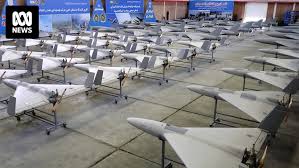
When Russia first turned to Iran’s Shahed-136 drones in 2022, it was a desperate wartime procurement move. Today, the tables have turned. Inside the Alabuga Special Economic Zone, 600 miles east of Moscow, Russia is now mass-producing its own upgraded versions of the Iranian-designed attack drone — and Tehran is no longer in the driver’s seat.
What began as a $1.75 billion cooperation deal has morphed into a one-sided industrial takeover. Western intelligence officials say Moscow has absorbed roughly 90% of the Shahed’s production process into its domestic defense sector, transforming Iran’s prized export into a Russian-controlled weapon system.
The result: Iran is sidelined, frustrated, and feeling the sting of a partnership that’s proving far more transactional than strategic.
Alabuga: The Beating Heart of Russia’s Drone War
A Factory Built for Independence
The Alabuga complex has become Russia’s largest drone manufacturing site, producing thousands of Shahed-136 units — known locally as the “Geran” — with an assembly line efficiency that rivals commercial manufacturing.
“Aluminium bars come in, engines are made from them; microelectronics are made from electric chips; fuselages are made from carbon fiber and fiberglass,” CEO Timur Shagivaleev boasted in a state TV documentary.
Recent satellite imagery shows the facility is still growing, adding new production halls and dormitories to house workers, signaling Moscow’s intent to push output beyond battlefield needs — and potentially into export markets.
Scaling Beyond the Iran Deal
Under the original contract, Russia was set to produce 6,000 drones by September 2025. Instead, it hit that number nearly a year early. Today, Alabuga is reportedly turning out over 5,500 units per month, a volume that could eventually support sales abroad — even back to Iran.
Ukraine’s Defense Intelligence notes that costs have plummeted. In 2022, each drone cost about $200,000. By 2025, that figure dropped to $70,000, thanks to localized supply chains and mass production.
Moscow’s Technical Leap
Upgrades Without Permission
Iran initially appeared to welcome Russia’s localization push. But as Moscow began to improve communications systems, extend battery life, and enlarge warheads, Tehran realized it had lost control over its own design.
These upgrades have made the drones deadlier, longer-lasting, and harder to intercept — but also entirely Russian-made. The Western intelligence source bluntly summarized:
“The end goal is to fully master production and avoid future negotiations with Tehran.”
The Political Fallout
A Rift in the “Axis of Convenience”
Iran has supplied drones, missiles, and technology since early in the Ukraine war, expecting Russia’s reciprocal support. But that support was conspicuously thin during Israel’s 12-day bombing campaign targeting Iran’s nuclear program in June.
For Tehran, Russia’s muted condemnation was more than a diplomatic slight — it was a reminder that Moscow acts only when it serves its own strategic interest.
Ali Akbar Dareini, an analyst at the Tehran-based Center for Strategic Studies, called the relationship “both cooperation and competition,” adding:
“Russians want more, to get more and give less — and that applies to Iran as well.”
Economic Tensions and Unpaid Bills
Sanctions have further strained the partnership. Iranian firms, notably Sahara Thunder, have reportedly complained about unpaid bills from Russia, with deliveries of promised aerospace technology stalling.
Tehran also accuses Moscow of dragging its feet on transferring certain aeronautical innovations — a key part of the original deal. These grievances, combined with Russia’s near-complete production independence, have deepened Iran’s sense of betrayal.
Strategic Implications
Russia’s Drone Autonomy
By internalizing Shahed production, Russia has:
-
Secured a cost-effective, scalable drone supply for the war in Ukraine.
-
Reduced reliance on foreign suppliers amid sanctions.
-
Positioned itself to commercialize battle-tested drones globally.
This evolution represents not just an industrial milestone, but a geopolitical pivot: Russia has taken a wartime dependency and turned it into an exportable asset — at Iran’s expense.
For Iran, a Cautionary Tale
Iran’s experience with Moscow underscores the risks of arms partnerships with powers that prioritize self-sufficiency over loyalty. Tehran now finds itself in the paradoxical position of having helped create a competitor in one of its most lucrative defense exports.
This saga is more than a military story — it’s a case study in how transactional geopolitics can turn cooperative ventures into competitive rivalries. For CEOs and policymakers, it highlights:
-
The importance of controlling intellectual property in joint ventures.
-
How supply chain localization can shift leverage in international agreements.
-
Why partners in crisis can become competitors the moment they no longer need you.
In the Russia-Iran drone saga, the war in Ukraine may have forged the alliance — but industrial self-interest is redefining it.