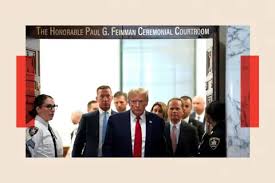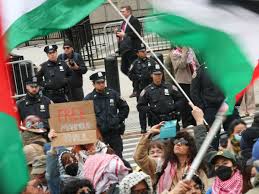
In what’s shaping up to be a landmark First Amendment showdown, a Massachusetts federal court will hear arguments this week challenging the Trump administration’s controversial “ideological deportation” policy. The lawsuit accuses the administration of using immigration enforcement as a tool to silence foreign students and academics who express pro-Palestinian views—a move civil rights advocates say sets a dangerous precedent for free speech, academic freedom, and democratic dissent.
The case—filed by the American Association of University Professors (AAUP) and the Middle East Studies Association (Mesa)—marks the first trial among multiple legal battles confronting the administration’s sweeping clampdown on U.S. universities.
The Core of the Lawsuit
Deportation for Dissent?
At the center of the case is the Trump administration’s assertion that foreign nationals can be deported not for crimes, but for expressing political views deemed a threat to U.S. foreign policy.
The government’s aggressive stance has already led to the arrest and attempted deportation of several noncitizen students and scholars who participated in pro-Palestinian activism or published writings critical of Israeli policy. All detainees have since been released, but several—such as Mahmoud Khalil, a graduate student from Columbia University—are still fighting ongoing deportation proceedings.
Plaintiffs argue that these actions violate constitutional protections, chilling free expression across campuses nationwide and punishing individuals for their political beliefs rather than any illegal conduct.
“Noncitizen members of the AAUP have been chilled by these ideological deportations,” said Ramya Krishnan, senior attorney at the Knight First Amendment Institute. “And citizen members have suffered too—because they are deprived of their colleagues’ insights and voices.”
Fear and Self-Censorship on Campus
Scholars Silenced
The lawsuit includes compelling testimony from academics who say the Trump crackdown has forced them to censor their work, cancel events, and withdraw from fellowships—out of fear their associations or speech could lead to arrest or denial of reentry.
Examples include:
-
Nadje Al-Ali, a German scholar at Brown University, who abandoned a nuanced feminist critique of Hamas and declined a fellowship in Lebanon, fearing it could flag her for deportation.
-
Megan Hyska, a Canadian-born professor at Northwestern, chose not to publish an op-ed critiquing Trump’s policy after Tufts student Rümeysa Öztürk was arrested for co-authoring an article about Gaza.
-
Nadia Abu El-Haj, an anthropology professor at Columbia, canceled events at the Center for Palestine Studies after two of her graduate students—Khalil and Mohsen Mahdawi—were detained by immigration authorities.
“We’ve seen a drastic erosion of academic freedom,” said Krishnan. “Faculty and students are afraid to speak, afraid to teach, and afraid to learn.”
Government Response and Legal Arguments
Denial of Policy, Questioning of Jurisdiction
Despite widespread reporting on the arrests and chilling effects, the U.S. Department of Justice claims no ideological deportation policy exists. In a court filing, government attorneys argue that deportations were lawful and that the First Amendment applies differently to noncitizens, particularly in immigration contexts.
“The AAUP’s case rests on a basic misunderstanding of the First Amendment,” the DOJ wrote.
However, Judge William G. Young, a Reagan-appointed judge overseeing the case, disagreed with the government’s attempt to dismiss the trial and warned against any witness intimidation or retaliation, stating it would constitute obstruction of justice.
Judge Young is no stranger to challenging the Trump administration. In a recent ruling, he struck down the termination of over $1 billion in federal research grants, calling it unlawful discrimination against LGBTQ+ and minority scholars.
The Human Toll
The Case of Mahmoud Khalil
Khalil’s story has become symbolic of what many call an authoritarian misuse of immigration power. Arrested earlier this year and released only after massive public pressure, Khalil has returned to New York City—but remains under threat of deportation.
He was welcomed back by supporters who held a rally in his honor. Images of Khalil speaking with a shirt reading “Lift the siege on Gaza” have since gone viral, becoming a flashpoint in the broader debate over campus speech and state surveillance.
Academic Community Fights Back
Why Universities Are Silent
While Harvard University is the only institution to formally sue the Trump administration so far, other universities have remained largely quiet—worried that resistance could put them in the administration’s crosshairs.
This vacuum has forced academic associations like AAUP and Mesa to lead the fight, filing at least four lawsuits to date challenging Trump’s education and immigration policies.
“Universities may be silencing themselves out of fear,” said Krishnan. “But those fears, unfortunately, are not unfounded.”
Legal experts say the First Amendment implications of this case could ripple far beyond higher education.
“Can the government arrest and deport people based on their political views?” asked Elora Mukherjee, director of Columbia Law School’s Immigrants’ Rights Clinic. “That’s what this case asks. And how the courts answer will define the boundaries of free speech in the U.S.”
What’s Next?
This trial is expected to last several days, with both citizen and noncitizen scholars taking the stand. Civil rights advocates see it as a test of the limits of executive power under Trump’s second term, especially as immigration enforcement becomes a tool of ideological policing.
Other challenges to Trump-era policies—including the defunding of universities, targeting of protest organizers, and surveillance of student groups—are also working their way through the courts.
The ideological-deportation trial in Massachusetts could become one of the most important legal battles of 2025. At stake is not only the freedom of a few foreign students, but also the very principle of academic freedom and political expression in the United States.
As the court prepares to rule, the academic world and civil liberties community wait with bated breath—hoping that the Constitution still offers protection from political retaliation, even under a presidency defined by its disregard for dissent.