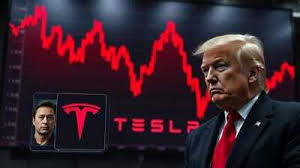
Elon Musk may have just shaken up American politics—but in doing so, he’s also shaken investor confidence in Tesla. The electric carmaker’s shares plunged over 7% in premarket trading Monday, threatening to erase $70 billion from its market capitalization as Wall Street digests the billionaire’s decision to launch a new political party: the America Party.
The dramatic market reaction reflects investor concerns that Musk’s latest move signals a deeper entanglement in US politics—one that could distract him from running Tesla, invite regulatory retaliation, and alienate consumers already wary of his increasingly polarizing public persona.
The Political Bombshell That Shook Wall Street
Musk’s America Party Debut
Over the weekend, Elon Musk took to X (formerly Twitter) to declare the creation of a new political force:
“When it comes to bankrupting our country with waste & graft, we live in a one-party system, not a democracy. Today, the America Party is formed to give you back your freedom.”
The announcement sent shockwaves across both political and financial circles. While Musk has long hinted at political aspirations and endorsed controversial positions, the formalization of a party is a significant escalation—and, according to analysts, an unwanted development for Tesla shareholders.
Market Fallout and Investor Panic
$70 Billion Wipeout in a Day
Tesla shares dropped more than 7% in early premarket trading, potentially cutting $70 billion off the company’s near-$1 trillion valuation when markets open. That decline would also dent Musk’s personal fortune by over $9 billion, lowering the value of his Tesla holdings to roughly $120 billion.
Despite remaining the world’s richest person—with an estimated net worth hovering near $400 billion—Musk is now under fire for diverting his attention from Tesla’s day-to-day operations.
“Very simply, Musk diving deeper into politics… is exactly the opposite direction that Tesla investors/shareholders want him to take during this crucial period for the Tesla story,” said Dan Ives, analyst at Wedbush Securities.
Ives described a “broader sense of exhaustion” among shareholders who fear Musk’s political crusade will drain focus from core operational goals, including new product rollouts, manufacturing efficiency, and competitive EV pricing.
The Trump Factor
A Brewing Feud Between Billionaires
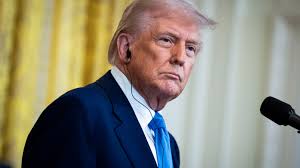
Donald Trump, whose own influence over the Republican base remains powerful, mocked Musk’s America Party, calling it “ridiculous” and branding the Tesla CEO a “train wreck” in a Truth Social post.
“I am saddened to watch Elon Musk go completely ‘off the rails,’ essentially becoming a TRAIN WRECK over the past five weeks.” — Trump
The deterioration of their once-amicable relationship—Musk was previously viewed as an unofficial tech advisor to Trump—has added a new layer of uncertainty. With Trump poised for a return to the White House, analysts warn the federal government could target Musk’s businesses, including Tesla, SpaceX, and Starlink, should the feud deepen.
Brand Risk and Public Perception
Tesla’s Reputation at Stake
For years, Tesla thrived on Musk’s reputation as a visionary entrepreneur and innovation leader. But his transformation into a political provocateur threatens to erode the brand’s broad appeal.
Musk’s earlier alignment with Trump already led to backlash from progressive consumers. Now, the creation of a political party could alienate moderate and apolitical Tesla fans as well.
“There’s a serious reputational risk here,” noted a former Tesla board member, speaking anonymously. “Customers want cutting-edge electric vehicles, not culture wars or political crusades.”
Tesla operates in a highly competitive EV market, with new rivals entering the space from China, Europe, and legacy automakers like Ford and GM. The company cannot afford a consumer revolt—especially when brand loyalty is increasingly tied to corporate neutrality in politically charged times.
Can Tesla Weather the Storm?
A Critical Inflection Point
Tesla has long been tightly intertwined with Musk’s personal brand. His social media posts have moved markets. His tweets have drawn fines from the SEC. And now, his political ambitions could upend Tesla’s trajectory.
Still, the company’s fundamentals remain strong. Tesla continues to lead in EV innovation, battery tech, and autonomous driving R&D. The firm recently reported robust quarterly deliveries and plans for major international expansion remain in motion.
But investors are no longer ignoring the Musk factor. Instead, they’re calculating how much Musk-as-activist is worth versus Musk-as-CEO.
“Tesla has reached a point where Musk may be more liability than asset,” said one hedge fund manager. “Investors are asking: can Tesla grow without his full attention?”
Looking Ahead
Will Musk Step Back—or Double Down?
The big question now is whether Musk will scale back his political ambitions or double down on the America Party. Early indications suggest the latter.
Musk reportedly plans to fund candidates in key congressional swing districts and is building out a political infrastructure, including PACs and campaign staff.
That puts Tesla in unprecedented territory—caught between the demands of Wall Street and the ambitions of a CEO-turned-political insurgent.
Elon Musk’s entry into formal politics may be historic, but it comes at a cost. For Tesla, the cost could be measured in billions of dollars in market value, a fraying investor base, and a widening reputational rift with consumers.
Whether this is a temporary blip or the beginning of a longer Tesla correction depends on one man’s ability—or willingness—to balance empire-building with governing aspirations.
And as investors brace for volatility, one truth becomes inescapable: Elon Musk is no longer just a CEO. He’s a political force. And that changes everything.