Thousands of Vehicles Parked at Port of Antwerp-Bruges Amid U.S. Trade Tensions
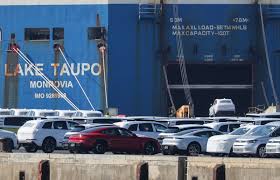
The Port of Antwerp-Bruges, one of the world’s busiest vehicle shipping hubs, has effectively turned into a giant open-air storage lot, with thousands of unsold cars, vans, trucks, and tractors sitting idle. The reason? Donald Trump’s aggressive “liberation day” tariffs, announced in April 2025, are already having a seismic effect on European vehicle exports to the U.S.
New figures from the port authority confirm a 15.9% plunge in exports of passenger vehicles and vans to the U.S. in the first half of 2025 compared to the same period last year. And it gets worse: heavy equipment exports, including trucks and tractors, have collapsed by 31.5%—a devastating blow to an industry already navigating supply chain strain, war-related shipping disruptions, and post-Brexit chaos.
The 25% Shock: Why European Automakers Are Rattled
Trump’s Tariff Spike Adds Tens of Thousands to Vehicle Prices
Before Trump’s latest tariff offensive, European vehicles faced a manageable 2.5% U.S. import duty. But as of April 2025, that figure has jumped to a punitive 25%—a tax that can add more than $10,000 to the price of a typical mid-size car and even $25,000 or more for high-end trucks or construction equipment.
The timing was no accident. Trump declared “Liberation Day” tariffs as part of his broader nationalist push to shift global manufacturing back to American soil. The move also doubled as a bargaining tactic to strongarm the EU into new trade concessions.
However, instead of compliance, European automakers like Volkswagen, BMW, and Volvo are now scrambling. Cars destined for American roads are either being stockpiled at European ports or rerouted to alternate markets, including Asia and Latin America—markets that may not have the same capacity or appetite for European models.
Antwerp-Bruges: From Gateway to Gridlock
Europe’s Second-Busiest Auto Port Buckles Under Pressure
The Port of Antwerp-Bruges, which handled over 3 million vehicles globally in 2024, now finds itself in logistical limbo. While the exact number of cars parked at the port hasn’t been disclosed, authorities confirm the tally is well into the thousands.
“The outlook for the second half of the year remains uncertain,” the port said in a statement. “Much will depend on whether a trade agreement between the EU and the US can be reached by 1 August.”
Port officials say the steepest export declines were recorded in May, just weeks after Trump’s announcement—a signal that manufacturers are already curbing output and rerouting logistics pipelines.
Not Just Cars: Tractors, Trucks, and Chinese Stockpiles
Multi-Sector Shockwaves Emerge as U.S.-EU Trade Rift Grows
Beyond passenger vehicles, exports of “high and heavy equipment” like tractors and construction vehicles have cratered—down by more than 30%. With some of these machines priced at $100,000 or more, the tariffs make transatlantic sales financially untenable.
Adding to the congestion, Chinese car manufacturers appear to be stockpiling vehicles at Antwerp-Bruges, possibly as a result of shifting their focus away from the U.S. due to similarly hostile trade conditions.
According to port representative Justin Atkin, the tariff impact is more immediate and chaotic than even Brexit or COVID-19.
“People talked about tariffs in the buildup to Trump’s return, but I don’t think anyone expected the level and severity of the instantaneous action,” said Atkin. “With the pandemic, there was a ramp-up and ramp-down cycle. This is more of an instant shock.”
More Than Just Tariffs: Red Sea Conflict, Bigger Ships Add to Delays
Shipping Delays and Container Gridlock Make Matters Worse
Antwerp-Bruges isn’t just facing tariff headaches. Disruptions in Red Sea shipping lanes, driven by ongoing regional conflict, are also pushing ships to divert routes, delaying docking schedules and increasing turnaround times.
Meanwhile, the global shift toward mega-container ships—larger vessels that carry more cargo—means ports like Antwerp-Bruges are experiencing container delays of up to eight days, compared to the standard five.
This convergence of factors has created a logistics bottleneck that could affect everything from automobiles to consumer electronics, and even liquefied natural gas—a key U.S. export.
Inbound Cargo Surges as U.S. Exporters Rush to Beat Retaliation
LNG Volumes Up 17% as Trade War Fears Loom
Interestingly, while EU exports to the U.S. are stalling, U.S. exports to the EU are surging, as American companies front-load shipments to beat potential EU retaliation.
The port reported a 17% increase in inbound cargo from the U.S. in the first half of 2025, driven in part by higher volumes of liquefied natural gas (LNG). Energy exporters are wary of being hit by EU countermeasures if trade negotiations collapse.
With the U.S. now the port’s second-largest trade partner after the UK, the stakes for a resolution are sky-high.
What’s Next: All Eyes on August 1 Trade Deadline
Can the EU and Trump Strike a Deal Before Exports Flatline?
The coming weeks will be crucial. The EU and U.S. have until August 1 to reach a new trade agreement that could ease or eliminate tariffs. However, negotiations have stalled, and hopes that a deal would be finalized last week were dashed.
Without a resolution, European manufacturers may be forced to scale down U.S.-bound production indefinitely—a move that would reverberate across supply chains, dealerships, and even consumer prices in the U.S.
If the EU retaliates, analysts predict a broader trade war could erupt, impacting not just vehicles, but also energy, agriculture, and consumer goods.
A Growing Trade Rift With Global Fallout
Antwerp’s Car Pileup Is Just the Beginning
The image of thousands of idle vehicles sitting at Europe’s top port is a potent symbol of what happens when geopolitics meets global trade. Trump’s tariff blitz may be scoring political points at home, but for European manufacturers and global supply chains, it’s a crisis in motion.
Unless a last-minute deal materializes, what’s happening at Antwerp-Bruges could become the new normal: congested ports, lost revenue, rising prices—and a fractured transatlantic trade alliance that took decades to build.