A Bold Move to “Restore Public Order”
In a controversial shift in U.S. policy, President Donald Trump signed an executive order on Thursday, July 24, aimed at forcibly removing unhoused people from public spaces nationwide. The directive urges local authorities to bypass existing legal protections and redirect federal funding toward institutional rehabilitation and involuntary mental health treatment.
The administration’s official stance? Make America Safe Again — by clearing the streets. According to the order, public safety is under threat from “endemic vagrancy, disorderly behavior, sudden confrontations, and violent attacks.”
While Trump’s team touts this as a humane solution for addiction and mental illness, critics argue the order is criminalizing poverty, weaponizing law enforcement against the vulnerable, and pushing the nation closer to institutionalized internment camps.
What the Executive Order Actually Says
Legal Barriers Dismantled
The order explicitly calls for the reversal of court rulings and termination of consent decrees that currently limit local governments from coercively treating people with mental illnesses. In other words, Trump wants to give municipalities broad authority to institutionalize people — often without consent.
Funding Redirected From Housing to Treatment
Rather than investing in affordable housing or shelters, the executive order redirects federal resources toward involuntary treatment facilities, including civil commitment centers. These long-term institutions are billed by the administration as “humane treatment” options — but civil rights advocates see them as a return to 20th-century asylums.
What’s Driving the Crackdown?
Record-High Homelessness Numbers
The executive order follows a record-high homelessness crisis, with over 770,000 people counted as homeless during a one-day national survey last year. The crisis is largely driven by a nationwide shortage of affordable housing, stagnant wages, and rising healthcare costs — not by criminal behavior, as the Trump administration suggests.
Supreme Court Paved the Way
This move comes after a landmark U.S. Supreme Court ruling in 2024, which gave cities the power to fine or jail homeless people for sleeping outdoors — even when no shelter beds are available. The decision in Grants Pass v. Johnson sparked national debate, and now appears to have emboldened the White House to escalate punitive measures.
Trump’s Political Messaging: “Make America Safe Again”
Administration’s Justification: Safety Over Rights
White House Press Secretary Karoline Leavitt said the order proves Trump is “delivering on his commitment to Make America Safe Again” by removing “vagrant criminals” and increasing resources for substance abuse and mental health treatment.
The administration’s narrative paints homeless people as public threats. The reality? The majority of unhoused individuals are victims of systemic failures, not perpetrators of crime.
Advocacy Groups Sound the Alarm
“This Will Worsen the Crisis”
Civil rights and homelessness advocacy organizations are sounding the alarm. Jesse Rabinowitz of the National Homelessness Law Center condemned the move as “a deprivation of basic rights,” warning that the order, combined with MAGA budget cuts to housing and healthcare, will push more people onto the streets, not fewer.
“This does nothing to lower housing costs or raise incomes. It simply criminalizes people for being poor.”
ACLU: Criminalization Wave Sweeping the Country
The American Civil Liberties Union (ACLU) recently reported more than 320 new anti-homelessness bills introduced nationwide, with most passing. The surge in legislation spans both Republican and Democratic states, signaling a bipartisan punitive shift.
Encampment Sweeps and RV Bans: A National Trend
From Oregon to California, Local Crackdowns Escalate
The federal order is amplifying trends already underway. San Francisco, for example, recently pledged to ban RV living as part of a citywide “cleanup” campaign. Police sweeps of encampments — often violent and unannounced — are now a standard tactic in many urban areas.
Advocates argue these sweeps destabilize vulnerable individuals, destroying personal belongings, breaking ties with outreach services, and increasing trauma — all while offering no meaningful path out of homelessness.
Forced “Treatment” or Modern Internment?
Trump’s “Tent Cities” Resurrect Dystopian Fears
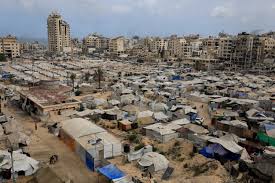
During his 2024 campaign, Trump floated the idea of forcing homeless individuals into tent encampments in remote locations, raising fears of facilities that resemble internment camps. His latest executive order now paves the way for those ideas to become reality.
The language of the order — focused on “institutional settings” and civil commitment — is sparking concern among legal scholars and human rights watchdogs. Will these facilities offer real treatment or serve as holding zones for unwanted populations? The lack of oversight mechanisms raises red flags.
CEOs, City Leaders, and Voters Must Now Choose
A Business Risk and a Moral Question
For CEOs and civic leaders, this policy shift presents a complex challenge. On one hand, there’s pressure to reduce visible homelessness near office parks and retail districts. On the other, this crackdown could ignite lawsuits, reputational damage, and employee unrest in progressive urban centers.
More importantly, the business community must ask: Is erasing people from sight a solution, or just a politically expedient illusion?
Policy or Performance?
Trump’s executive order on homelessness may play well with parts of his base, but experts warn that it prioritizes optics over outcomes. Without structural solutions — affordable housing, mental health funding, and living wages — punitive measures only deepen the crisis.
The coming months will test whether city governments follow the order’s lead — or resist it in favor of more humane, effective approaches.