A Harvest Without Hands – California’s Farms Hit Hard by Immigration Raids
In the fertile fields of Ventura County and California’s Central Valley, where billions of dollars worth of fruits and vegetables are grown each year, an unexpected crisis is unfolding—not from drought or wildfire, but from fear.
As part of President Donald Trump’s renewed immigration crackdown, U.S. Immigration and Customs Enforcement (ICE) agents have conducted high-profile raids on farms across California. The result? Thousands of undocumented and immigrant workers—many of whom have spent decades picking the crops Americans rely on—are disappearing from the fields, leaving produce to rot unharvested.
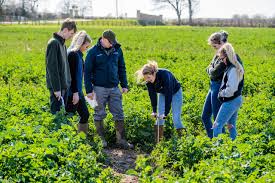
“In the fields, I would say 70% of the workers are gone,” says Lisa Tate, a sixth-generation farmer. “If 70% of your workforce doesn’t show up, 70% of your crop doesn’t get picked and can go bad in one day.”
Economic Devastation at Peak Harvest
This mass exodus comes during peak harvest season, when crops like strawberries, peppers, and leafy greens require intense manual labor. Without pickers, farms are losing entire yields, and grocery store prices could rise sharply in the coming weeks.
“Most Americans don’t want to do this work,” Tate adds. “Most farmers here are barely breaking even. I fear this has created a tipping point where many will go bust.”
Two supervisors interviewed by Reuters painted an equally grim picture: one expected 300 workers and got just 80. Another reported only 17 showing up instead of the usual 80.
The Workers Behind America’s Food Supply
A significant portion of U.S. farm labor is made up of immigrant workers, many of whom are undocumented. According to former CBO Director Douglas Holtz-Eakin, nearly 80% of U.S. farm workers are foreign-born, with almost half of those lacking legal status.
These individuals are the backbone of America’s food system—performing grueling, low-paid labor that few native-born citizens are willing to do.
“This is bad for supply chains, bad for the agricultural industry,” said Holtz-Eakin. “It’s going to lead to price hikes for consumers.”
California alone grows over 75% of America’s fruits and nuts and more than a third of its vegetables, with the agricultural sector contributing nearly $60 billion to the economy in 2023.
‘We Wake Up in the Morning Scared’ – Voices from the Fields
For many immigrant farm workers, fear has replaced routine. ICE raids have caused entire communities to go into hiding, and even workers with legal status are avoiding the fields.
A 54-year-old undocumented worker who’s been in U.S. agriculture for three decades told Reuters:
“If they show up to work, they don’t know if they will ever see their family again.”
Another added:
“We worry about the sun, the heat, and now a much bigger problem – many not returning home.”
These stories reflect the emotional toll the raids have taken, forcing some workers to send U.S.-born children to run errands or carpool with citizens to avoid detection.
Community Groups: ‘Workers Still Return – But Fear Lingers’
Despite the fear, some worker advocacy groups say that most farm laborers eventually return to work out of sheer economic necessity. But the days following a raid often see sharp drops in attendance.
Advocacy groups report widespread behavioral changes among workers—from changing transportation methods to limiting public exposure.
Still, they warn that ICE’s tactics are having long-term chilling effects on labor participation.
Even Legal Workers Fear ICE – A Broken System?
The fear has reached beyond the undocumented. Greg Tesch, a farm owner in Central California, says even documented workers are staying away.
“Nobody feels safe when they hear the word ICE. Even the documented people get scared.”
This culture of fear threatens not only individual families, but the integrity of the entire agricultural supply chain.
“If things are ripe, like bell peppers, and they’re not harvested in 2–3 days, they get sunburned or over-mature. We need the labor,” Tesch warns.
Trump’s Dilemma – Enforce the Law or Protect Farmers?
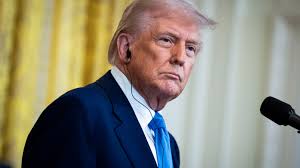
Trump, while unapologetic about the immigration crackdown, has acknowledged the unintended consequences of ICE raids on sectors like farming and hospitality.
“Our farmers are being hurt badly,” Trump admitted. “They’re not citizens, but they’ve turned out to be great.”
Despite these remarks, no formal policy change has been made to protect agricultural labor from immigration enforcement. A White House spokesperson emphasized that Trump remains committed to both enforcement and supporting agriculture, a tightrope act that is proving difficult to balance.
The Path Ahead – Can U.S. Agriculture Survive Without Reform?
Analysts like Bernard Yaros from Oxford Economics say there is little evidence native-born workers will step in to fill the labor gap. Immigrant labor, he says, is functionally irreplaceable for U.S. farms.
“Unauthorized immigrants tend to work in different occupations than those who are native-born,” Yaros noted. “The gap is not easily closed.”
Without a serious policy rethink, U.S. agriculture could be on a collision course with economic reality. Farmers warn of mass bankruptcies, soaring food prices, and permanent damage to the nation’s food security.
A Broken Harvest
California’s empty fields serve as a visual warning of the human and economic cost of political decisions. The ICE raids may be fulfilling Trump’s campaign promises on immigration, but they are simultaneously undermining the very industries he claims to champion.
For now, the strawberries wither, the bell peppers scorch, and a question hangs in the air:
What happens to America’s food supply when the hands that feed us are too afraid to work?