Trump’s Immigration Agenda Faces Major Legal Blow
In a powerful rebuke of the Trump administration’s hardline immigration tactics, a federal judge has ruled that Donald Trump’s proclamation of an “invasion” at the U.S.-Mexico border is unlawful and that his abrupt ban on asylum applications violates both statutory and constitutional limits.
U.S. District Judge Randolph Moss found that Trump exceeded his authority by suspending the legal right to seek asylum and by attempting to override immigration laws passed by Congress.
The decision strikes at the heart of Trump’s controversial immigration crackdown and offers hope to thousands stranded at the southern border. The White House now has 14 days to appeal the ruling, which could ultimately end up in the hands of a higher court.
Background: What Was Trump’s Proclamation?
On Inauguration Day 2025, President Trump signed a sweeping executive proclamation that shut down legal border crossings for asylum seekers. Citing what he described as a national “invasion,” the order directed immigration officials to “repel, repatriate, or remove” any individual attempting to enter through the southern border.
The move instantly halted legal processing of asylum claims—leaving tens of thousands of people, many fleeing war, violence, and persecution, stranded in Mexico and unable to even apply for protection under U.S. law.
The Court’s Verdict: Presidential Overreach
In Wednesday’s landmark decision, Judge Randolph Moss ruled in favor of 13 asylum seekers and three immigration rights groups, stating unequivocally that the president does not have the power to override asylum law.
“Nothing in the Immigration and Nationality Act or the Constitution grants the president or his delegees the sweeping authority asserted in the proclamation,” Moss wrote.
He added that Trump’s unilateral actions attempted to create an alternative immigration system, bypassing the rules enacted by Congress and the enforcement mechanisms of established federal agencies.
This ruling emphasizes a key legal principle: immigration law is made by Congress, not the White House.
Key Takeaways from the Ruling
-
✅ Trump cannot declare an “invasion” to justify ignoring immigration law
-
✅ The right to apply for asylum remains protected under U.S. law
-
✅ Executive power has limits, even in matters of national security
-
✅ The ruling applies nationwide due to the case’s class-action status
Reactions from Rights Advocates: “A Win for Dignity and the Rule of Law”
Immigrant rights organizations were quick to praise the ruling, calling it a major win for constitutional governance and human rights.
“This decision is a win for human dignity and the rule of law,” said Rochelle Garza, President of the Texas Civil Rights Project. “It sends a clear message: the government cannot use cruelty as a weapon against people fleeing violence.”
Javier Hidalgo of RAICES added:
“The Trump administration’s sweeping invocation of executive authority transgresses the bounds of our Constitution. The judicial branch is what stands between us and anarchy.”
The Global Human Cost: Who Was Affected?
The ruling stems from a class-action lawsuit filed on behalf of asylum seekers from:
-
Afghanistan
-
Ecuador
-
Cuba
-
Egypt
-
Brazil
-
Turkey
-
Peru
Many had already reached the U.S. border and were lawfully waiting to present their asylum cases when the ban took effect. Some were forcibly removed from U.S. soil without being granted a hearing.
Others have been left languishing in shelters on the Mexican side of the border or forced to seek work or residency in Mexico, despite being at risk in their home countries.
Trump’s Broader Strategy: Shut Down Legal Immigration
This is not an isolated policy, but part of a broader strategy. Since returning to office, Trump has:
-
Cut off legal pathways to entry
-
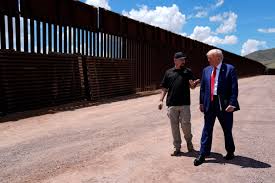
Militarized the U.S.-Mexico border
-
Attempted to end birthright citizenship
-
Blocked asylum at ports of entry
-
Imposed a blanket deportation agenda for undocumented families
While illegal crossings have dropped, legal asylum seekers have been disproportionately affected, triggering outcry from human rights groups and legal experts.
Political Fallout and Legal Loopholes
The ruling follows a Supreme Court decision last week that limited the power of lower federal courts to issue nationwide injunctions against presidential orders. But because the asylum ruling was filed as a class-action case, it sidesteps that limitation—for now.
Still, Stephen Miller, Trump’s White House deputy chief of staff and the architect of his immigration policy, accused the plaintiffs of trying to “circumvent the court” and warned of a “protected global class” gaining access to the U.S.
Critics argue that Miller’s framing reflects an attempt to undermine judicial review and equate humanitarian protections with threats to national security.
What Happens Next?
The Trump administration has 14 days to appeal the ruling and is expected to do so urgently. If upheld:
-
DHS will be required to resume processing asylum claims
-
Thousands of people in legal limbo may regain a pathway to protection
-
Future attempts to suspend asylum access will likely require Congressional approval
The case is expected to set precedent for future executive actions on immigration, especially under emergency or national security pretenses.
Rule of Law vs. Rule by Fiat
As the U.S. wrestles with a deeply polarized immigration debate, Judge Moss’s ruling reinforces the idea that presidential powers have constitutional boundaries.
It’s also a reminder that human rights cannot be unilaterally stripped away—even during a manufactured “invasion.”
“This isn’t just about immigration,” said Hidalgo of RAICES. “It’s about defending the very foundations of our democracy.”