What Happened in California?
On Wednesday evening around 6:30 p.m., an F-35C Lightning II fighter jet assigned to the US Navy’s Strike Fighter Squadron VFA-125—known as the “Rough Raiders”—crashed in open farmland near Naval Air Station Lemoore, about 40 miles southwest of Fresno.
Eyewitness footage from CNN affiliate KFSN showed towering flames and plumes of black smoke as emergency response teams, including Cal Fire and local EMS, rushed to the site. Fortunately, the pilot ejected in time and survived.
The cause of the crash remains under investigation by the Navy.
The Jet Behind the Crash: A $100M War Machine
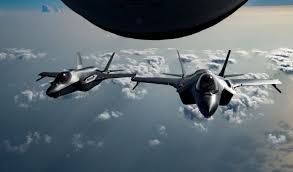
The aircraft involved was an F-35C, one of three variants of the F-35 Lightning II family. Specifically designed for carrier-based operations, the F-35C has broader wings, a reinforced landing gear, and upgraded avionics for long-range missions from aircraft carriers.
But that sophistication comes at a steep price. Each F-35C costs approximately $100 million, not including ongoing maintenance and upgrade costs.
And it’s not just a Navy problem—the F-35 program spans across all U.S. military branches:
-
F-35A: Air Force (conventional takeoff and landing)
-
F-35B: Marine Corps (short takeoff and vertical landing)
-
F-35C: Navy (carrier variant)
Not the First—And Likely Not the Last
This crash marks the second F-35 incident in 2025 alone. Back in January, an Air Force F-35A went down during a training mission in Alaska at Eielson Air Force Base. Like Wednesday’s crash, the pilot survived after ejecting safely.
These events are not isolated.
According to F-16.net’s F-35 mishap database, the stealth fighter has been involved in at least 20 significant accidents or incidents since 2014, including:
-
Runway overshoots
-
Mid-air failures
-
Structural damage
-
Engine fires
-
Ejection seat failures
Do the Numbers Add Up? A Program Under Fire
With a projected lifecycle cost of $1.7 trillion, the F-35 program is the most expensive weapons system in military history. Built by Lockheed Martin, the fighter jet was marketed as the future-proof backbone of allied air forces, promising unmatched stealth, situational awareness, and multi-role capabilities.
But the latest 2025 report from the Defense Department’s Director, Operational Test and Evaluation paints a very different picture:
“The operational suitability of the F-35 fleet continues to fall short of Service expectations. All variants fail to meet reliability, maintainability, and availability requirements.”
Some troubling data points include:
-
Poor mission capable rates—often below 60%
-
Lengthy maintenance cycles
-
Costly supply chain bottlenecks
-
Persistent software integration bugs
A Global Investment—With Global Risks
Despite mounting concerns, the F-35 program remains a critical part of allied defense strategies across the globe. According to FlightGlobal’s World Air Forces 2025 database, the US military maintains:
-
Air Force: 246 F-35As
-
Marine Corps: 122 F-35Bs
-
Navy: 41 F-35Cs
In total, 17 allied nations have invested in or received deliveries of the F-35, including the UK, Japan, Israel, South Korea, Australia, and several NATO members.
But with crashes and maintenance issues rising in frequency, there’s growing concern over the jet’s long-term viability—not just as a warfighting platform, but as a geopolitical pillar.
Frankenjets and Patchwork Repairs: A Symptom of Larger Problems?
Earlier this year, a reconstructed F-35A—dubbed the “Frankenjet”—was cleared for active service by the 388th Fighter Wing after being rebuilt from two previously damaged aircraft.
While seen as a win for resourcefulness, critics argue it’s a red flag for a system relying on cannibalized parts just to stay airborne.
The Frankenjet incident, combined with Wednesday’s crash, is reviving long-standing debates about:
-
Whether the F-35 is too advanced for its own good
-
If the Pentagon should pivot toward simpler, more modular systems
-
Whether budgetary overreach is creating defense liabilities, not assets
Implications for Defense Stakeholders, CEOs, and Contractors
For corporate leaders, investors, and stakeholders in the defense industry, the latest crash is a flashing red light:
-
Lockheed Martin, Pratt & Whitney, and other F-35 contractors may face renewed scrutiny from the Pentagon and Congress.
-
Defense CEOs must prepare for a possible tightening of procurement pipelines if operational performance doesn’t improve.
-
Shareholders should track how these crashes affect contractor stock, federal reviews, and international confidence.
And for the Department of Defense, a strategic pivot may be on the horizon.
Is the F-35 Program Flying Too Close to the Sun?
The F-35 was designed to be the aircraft of the future—a one-size-fits-all marvel for 21st-century warfare. But with each crash, that dream inches closer to a cautionary tale of over-engineering, under-delivery, and ballooning costs.
With billions spent and lives at stake, the F-35’s next chapter will depend on whether the Pentagon—and Lockheed Martin—can turn data-driven skepticism into lasting reform.